The Blueprint Sessions: Engineering "The Ideal"
Discover how "Ideal Girls" was engineered by merging classical music theory with cutting-edge Cultural Technology. From training custom AI voice models to executing a surgical master in Pro Tools, this deep-dive reveals the professional "BluePrint" process of building the future of virtual pop.
4/27/20263 min read
The Philosophy: Why I Do It This Way
For me, music is a structural solution to internal noise. Using Logic Pro X, Pro Tools, and AI isn't about taking the easy way out—it's about scaling my musical theater brain into a pop format. It’s about taking the rigor of a conservatory education and applying it to the "Cultural Technology" of the future.
"Ideal Girls" is more than a track. It’s a testament to the idea that Resilience is a design choice. Every note, every harmony, and every vocal shift was conceived to build a digital world where I am the Architect.
// STATUS: MASTER_COMPLETE
// CREATOR: JayRr Music
// ACCESS: [jayrrmusicprod.com]
#MusicProduction #TheIdeal #ArchitectLife #LogicPro #ProTools #VirtualLabel #SondheimVibes #CulturalTechnology #ResilienceByDesign #jayrrmusicprod
The Blueprint Sessions: Engineering "The Ideal"
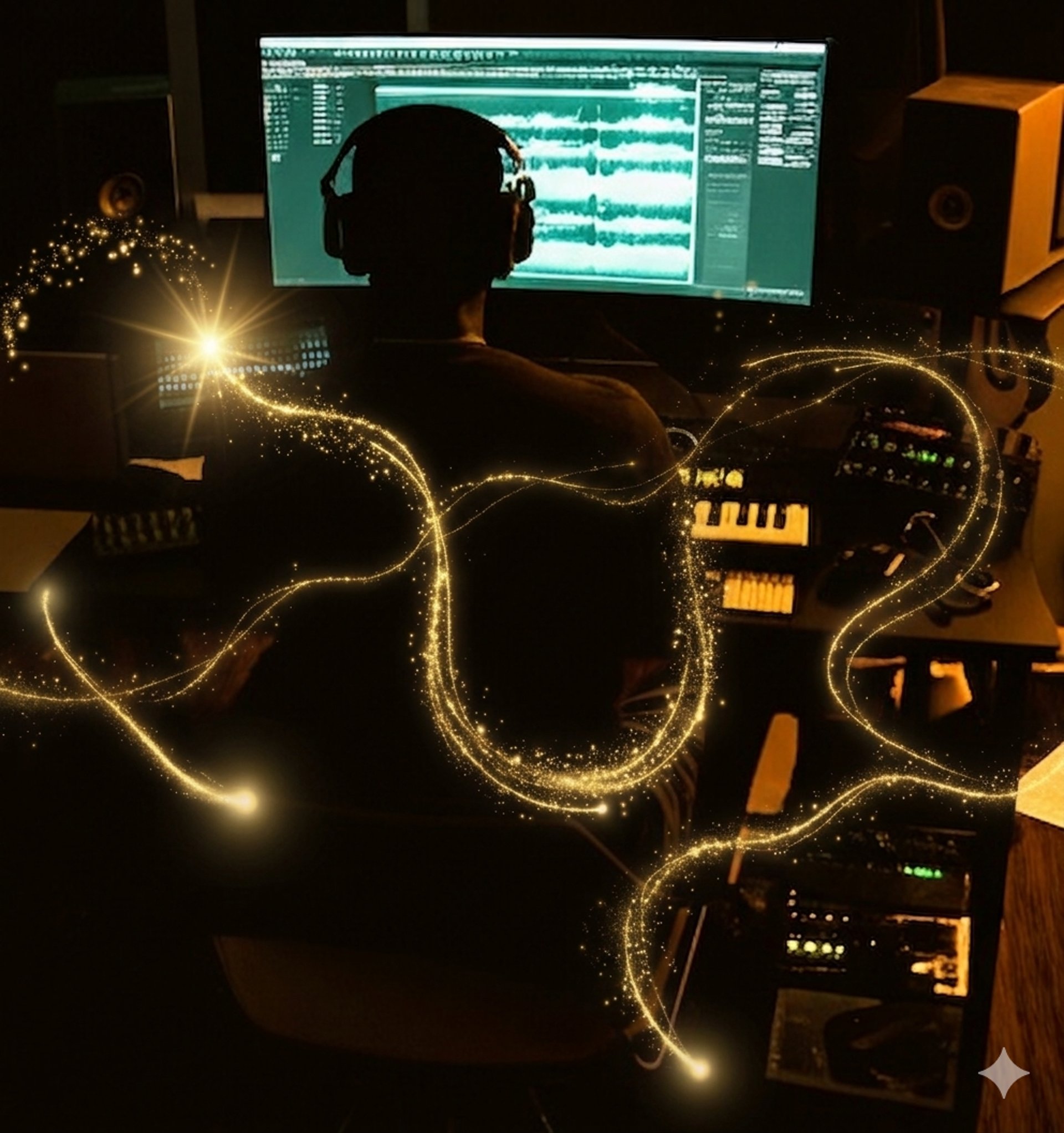
When the lobby is quiet and the rest of the world is offline, the "Architect" takes over. Producing "Ideal Girls" wasn't just about hitting record; it was a process of musical self-therapy and structural engineering. Here is exactly how I built this track from the ground up.
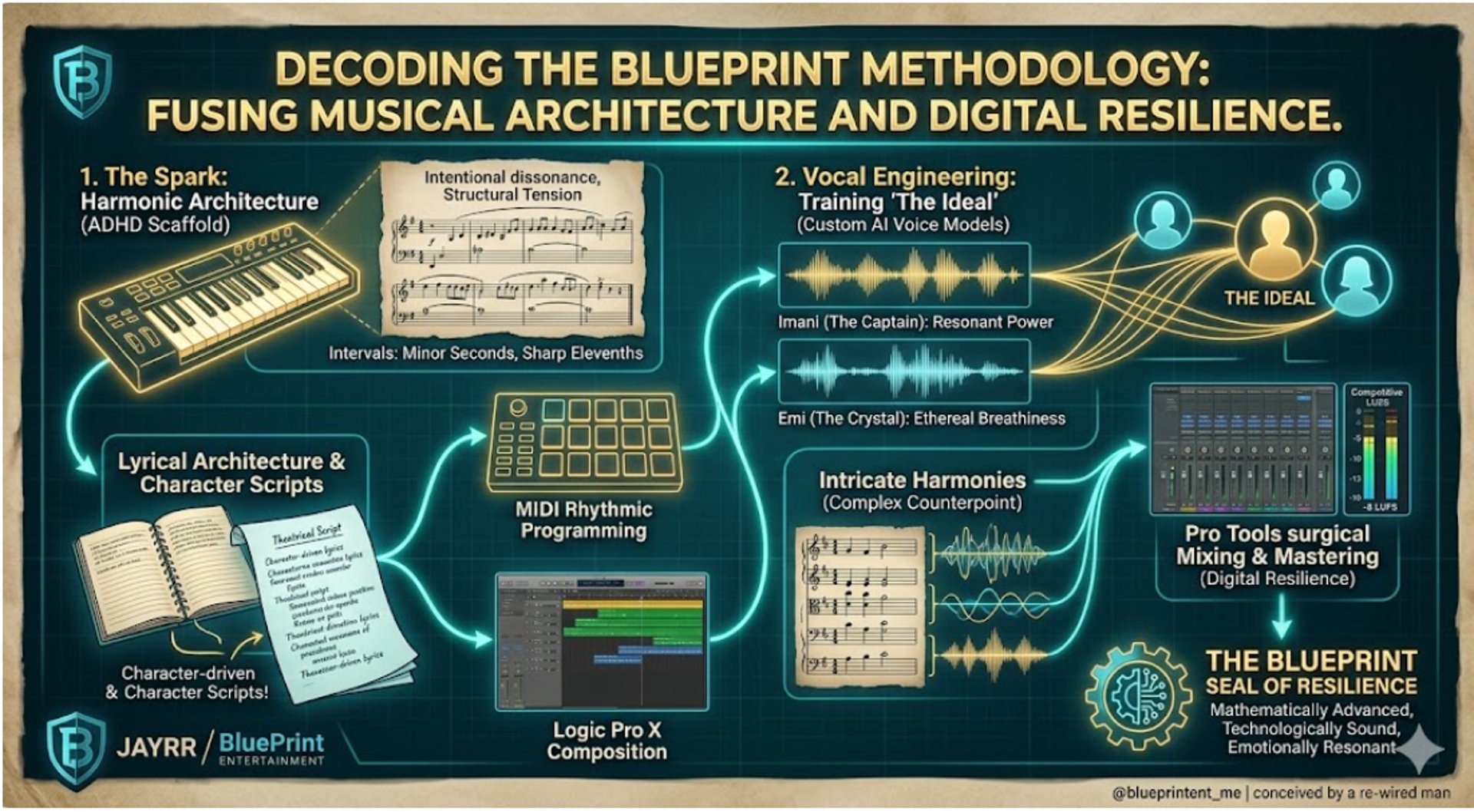
The Spark:
Harmonic Architecture & The Sondheim Influence
My process never starts with a generic loop. Because of my background in music education and my deep-dive into the works of Sondheim and LaChiusa, I approach a pop song like a playwright approaches a script.
The Theory: I sat down with my MIDI keyboard and started with the "structural solution." I wanted a melody that felt dissonant yet beautiful—something that mirrors the internal noise of a nomadic creator.
The "Logic" of the Draft: In Logic Pro X, I mapped out a composition that uses "Architectural Melodies." I’m looking for intervals that surprise the ear—minor seconds and sharp elevenths—to give THE IDEAL a sound that isn't just "radio-ready," but intellectually stimulating.
Building the Digital Heartbeat
Once the piano sketch was done, I moved into the "Engine Room."
Rhythmic Precision: I don’t just drag and drop drum patterns. I play them in. Using the MIDI pads, I tapped out the driving, high-octane pulse of "Ideal Girls." It had to feel urgent—like a Chicago night shift where every second counts.
The Texture: I layered classic analog synth emulations with digital "glitch" textures. I’m obsessed with the "geometry of joy"—finding that perfect mathematical balance where a heavy 808 bass sits perfectly underneath a sparkling, "crystal" synth lead.
The Vocal Surgery:
Training the "Ideal" Voices
This is the most personal and technical part of my method. I don't believe in generic AI; I believe in Digital Resilience.
The Training: I spent weeks training custom AI voice models for each girl. Using my own vocal guides as the "scaffold," I used RVC (Voice Conversion) technology to transform my performances into the specific tones of the roster.
For Imani (The Captain), I pushed the model for "chest-voice" resonance—power and authority.
For Emi (The Crystal), I dialed in an ethereal, soft-K-pop breathiness that feels like a daydream.
The Harmony Stack: To get that massive "wall of sound" in the chorus, I used generative AI to help me map out five-part counterpoint. I then manually edited these in Pro Tools, adjusting the "formant" of each voice so they actually sound like five different women standing in a room together.
The Engineering:
Pro Tools & The "Surgical" Mix
After tracking, I moved the project into Pro Tools for the "Surgical Phase."
The Pocket: I’m a perfectionist about the "pocket." I side-chained the kick drum to the bassline so that every time the beat hits, the music ducks out of the way just enough to let the low-end punch you in the chest.
The Vocal Polish: I used surgical EQ to remove the "digital harshness" of the AI, adding warmth and saturation to make the girls sound like they were recorded on a vintage tube mic in a high-end NYC studio.
Mastering:
The Final Seal of Resilience
Mastering isn't just about making it loud; it's about making it durable.
The Final Chain: I ran the final mix through a series of multiband compressors and limiters to hit a competitive -8 LUFS.
The Goal: Whether you're listening on high-end studio monitors or cheap earbuds in a subway station, "Ideal Girls" had to feel expensive. I used stereo-imaging to push the harmonies to the far edges of your headphones, leaving the lead vocal dead-center, right in your face.
© 2026 JayRr Music & BluePrint Entertainment. All rights reserved.