From "IT Factor" Predation to BluePrint Liberation
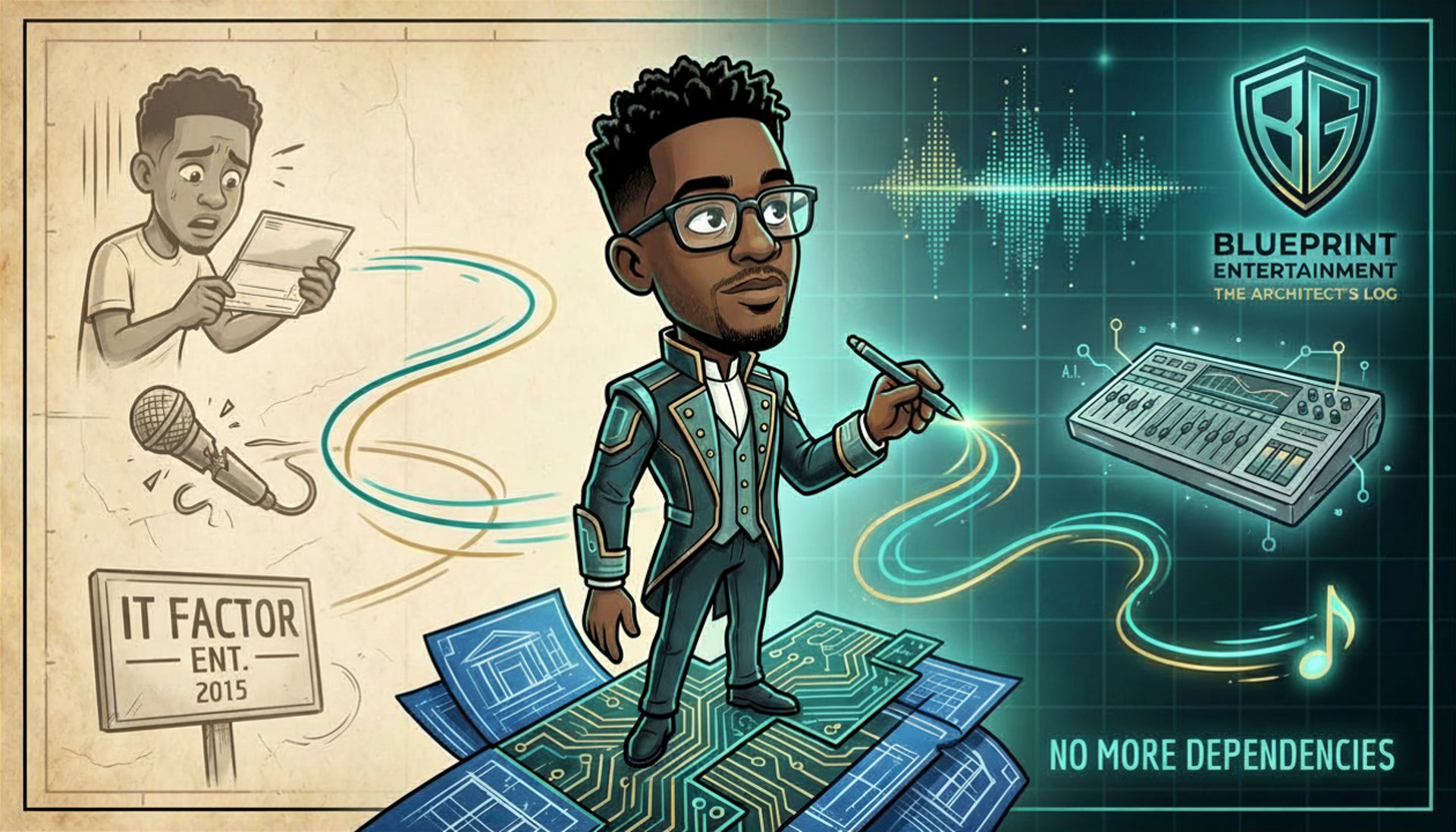
From "IT Factor" to BluePrint: A nomadic creator’s 15-year journey through the predatory music industry to AI-driven liberation. One man, no gatekeepers—just the architecture of a virtual empire.


They say the distance between a dream and reality is action. But they don't tell you that sometimes, that action leads you straight into a minefield.
If you go back to April 2015, you’ll find an article in K-Crush America. It features a much younger, perhaps more wide-eyed version of me. The headline reads: "New Entertainment Company Hopes to Find Artists with the ‘IT Factor.’" At 31, I was convinced I was about to change the world. I had the training, the passion, and a mission to bridge the gap between East and West.
But looking back from the vantage point of 2026, that article feels like a message in a bottle from a different lifetime. It was the beginning of a ten-year masterclass in betrayal, obsession, and eventually, total creative liberation.
The Role Model and the Rosetta Stone
In 2015, my North Star was one man: Lee Soo-man.
To me, he wasn't just a businessman; he was a visionary who understood that music was only one part of the "Cultural Technology" required to build an empire. I was so obsessed with the SM Entertainment blueprint that I did something most people thought was insane: I learned Korean specifically so I could read his autobiography. It wasn't available in English. It was only written in Hangul, and I refused to let a language barrier keep me from the "sacred texts" of the industry I wanted to conquer.
I wanted to build my own SM. I wanted to replicate the precision of SHINee—who, in my opinion, remain the perfect boyband. Their harmonies, their experimentalism, and their ability to move as a single, flawless unit was the gold standard. I wanted that same unique, avant-garde sound that f(x) brought to the table. I wasn't just a fan; I was a student trying to reverse-engineer a miracle.
The Naive Architect:
Thousands Spent, Lessons Earned
Armed with that "IT Factor" dream, I set out to start a boyband. I threw myself into the fire in both Los Angeles and South Korea. I spent thousands—money I had worked hard for—trying to fund auditions, training, and production.
But I was young, and I was naive.
The "industry professionals" saw me coming from a mile away. In the shark-infested waters of LA and the high-pressure corridors of Seoul, I was used. I was the one writing the checks while others were writing themselves into my narrative for their own gain. I learned the hard way that when you depend on a human infrastructure to build your dream, you are at the mercy of human greed and human ego.
I remember standing in Seoul, looking at the SM Communication Center, feeling like I had the keys to the kingdom in my mind but nothing but empty pockets and broken promises in my hands. I had the blueprint, but the builders had let me down. I realized then that in the traditional industry, you aren't just an artist; you’re a line item. And if you don't have the "right" people protecting your interests, they’ll bleed you dry in the name of "development."
The Ghost of 2015 meets the Reality of 2026
For years, that 2015 article haunted me. It felt like a public record of a "failure." I had announced my intentions to the world, and then... silence. I moved from city to city—Chicago, NYC, Wisconsin—carrying the weight of those thousands of lost dollars and the sting of being "that guy who tried to start a label."
But then, the world shifted. Technology began to bridge the gap that humans had widened.
Why is BluePrint Entertainment different? Why is now the perfect time?
Because for the first time in fifteen years, I don’t have to depend on anyone.
The struggle with human connection and the "dating hangups" I’ve mentioned before weren't just personal hurdles—they were professional ones. Relying on the volatile nature of human talent and the "gatekeepers" of the industry was the glitch in my old system.
With the advent of high-level A.I. and the software I’ve spent years mastering, the "Re-Wired Man" has become a self-contained factory.
The Talent? Created. My AI soloists and groups don't have egos. They don't break contracts. They don't lose focus. They are the realization of the "IT Factor" I was looking for in 2015, but they are built from my own creative DNA.
The Music? Composed and produced on my terms, blending that Sondheimian complexity with the K-pop gloss I fell in love with in 2011.
The Control? Absolute. No more predatory managers. No more "experts" telling me my vision is too niche.
Building the Sanctuary
BluePrint is the sanctuary I tried to build in 2015, but without the cracks in the foundation. It’s no longer about finding "trainees" to mold; it’s about manifesting the art directly from the source.
In the 2015 article, I said I wanted to "give a voice to those who aren't given a fair chance." I didn't realize then that the person I was really talking about was me. I was the one who needed the chance to speak without being filtered through the greed of the industry.
The dream didn't change. The technology finally just caught up to the Architect. I’m no longer the naive kid looking for the "IT Factor" in others. I found it in the machine, and I found it in myself.
Welcome to the new era. No gatekeepers. Just the Blueprint.
The Architect’s Question: Looking back at that 2015 version of me, I see so much passion but zero protection. I’m curious—have you ever had a dream that you had to let "die" just so it could be reborn as something stronger? How much of your past "naive" self do you still carry with you?
click logo to read article about IT Factor Ent. from 2015



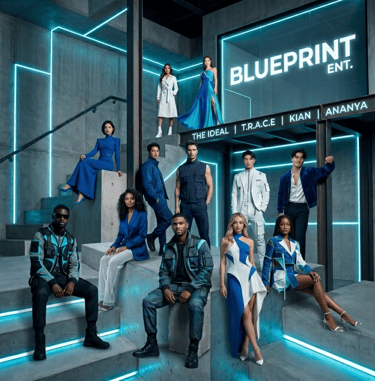
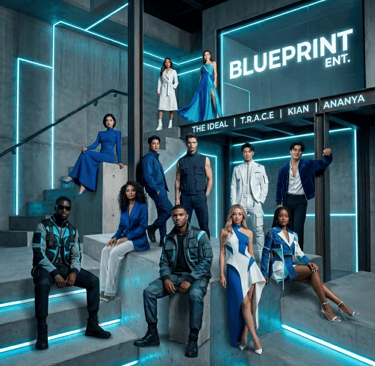
*For Those Complaining about the use of A.I, while there is a valid and vocal concern that A.I. threatens to displace human artistry, viewing it solely as a thief of labor overlooks its potential as a powerful cognitive partner. For many, the "blank page" isn't just an obstacle; it’s a site of executive dysfunction and sensory overload. By embracing these tools instead of resisting them, I’ve found that A.I. acts as a digital scaffold that helps me filter out the noise and organize the chaos of my own ideas. It doesn't replace my vision—it cultivates it by handling the technical heavy lifting, allowing me to focus my energy on the deep, high-level creative direction that only a human mind can conceive. Rather than diluting the craft, it has become the very technology that allows me to scale my imagination without the traditional gatekeepers.
© 2026 JayRr Music & BluePrint Entertainment. All rights reserved.